

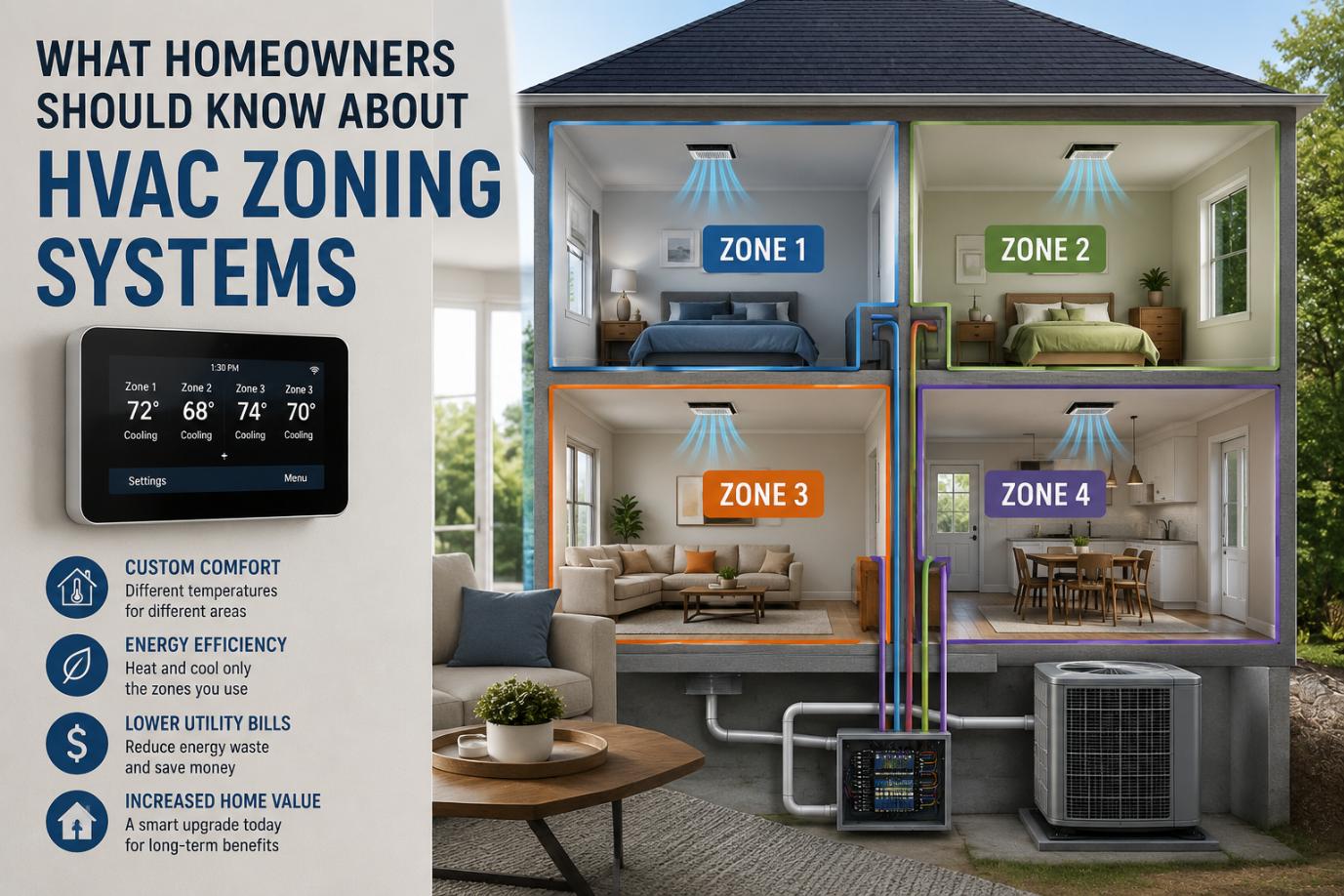
Staten Island homeowners often deal with changing comfort needs from one room to another. A sunny second floor in Todt Hill may feel much warmer than a finished basement in Great Kills, even when the thermostat says everything is comfortable. HVAC zoning systems are designed to solve these uneven temperature problems while improving efficiency throughout the home.
Quick Answer
An HVAC zoning system divides your home into separate temperature-controlled areas using dampers, thermostats, and a central control panel. Instead of heating or cooling the entire house the same way, each zone receives conditioned air based on its individual needs. This can improve comfort, reduce energy waste, and provide better temperature control for homes with multiple levels, additions, or varying sun exposure.
What Local Readers Should Know
-
Many homes throughout Staten Island have multiple floors or additions that naturally develop hot and cold spots.
-
Older homes in neighborhoods like St. George and West Brighton often have unique layouts that can benefit from customized airflow.
-
HVAC zoning may help reduce unnecessary heating and cooling by directing conditioned air only where it is needed.
-
Local weather along the New York Harbor and Lower New York Bay can create temperature differences throughout the home during every season.
-
A properly designed zoning system works best when installed and balanced by an experienced HVAC professional.
Why HVAC Zoning Systems Matter for Staten Island Homeowners
HVAC zoning systems matter because they address uneven temperatures that are common in many Staten Island homes. Seasonal humidity, cold winters, coastal influences, and varying home designs all contribute to comfort challenges that a single thermostat cannot always solve.
AFCO Heating & Air Conditioning helps homeowners throughout the area evaluate whether zoning makes sense for their home’s layout and comfort goals. After this introduction, we’ll refer to ourselves as we because our focus is helping local homeowners understand their options.
Homes across Richmond County range from historic properties to newer construction. Split-level homes, expanded ranches, and multi-story residences often experience noticeable temperature differences between floors. A zoning system can provide more personalized comfort while helping the HVAC equipment operate more efficiently.
Local Data and Field Observations
Professional field observations show that multi-level homes throughout Staten Island frequently experience uneven temperatures due to changing elevations, varying insulation levels, and different amounts of sunlight entering the home.
Homes near the Verrazzano-Narrows Bridge and waterfront areas may also experience stronger winds that influence indoor temperatures during colder months. During the summer, upper floors can become significantly warmer than lower levels because heat naturally rises.
These common conditions make zoning a practical solution for many local homeowners seeking consistent comfort.
Local Impact
HVAC zoning can significantly improve comfort throughout the home while helping reduce unnecessary system operation.
Instead of overheating unused bedrooms or overcooling lower levels, each zone receives heating or cooling only when needed. This can lead to:
-
More consistent temperatures throughout the house.
-
Improved comfort for family members with different temperature preferences.
-
Reduced wear on HVAC equipment.
-
Better energy efficiency in many situations.
-
Greater control over frequently used living spaces.
These advantages are especially valuable during Staten Island’s cold winters and humid summers.
Warning Signs Your Home May Benefit From HVAC Zoning
HVAC zoning may be worth considering if you notice one or more of these common signs:
-
Upstairs rooms remain much warmer during summer.
-
Certain bedrooms always feel colder during winter.
-
Family members frequently adjust the thermostat.
-
Finished basements never seem comfortable.
-
Rooms with large windows overheat during sunny afternoons.
-
Home additions never match the rest of the house.
-
Energy bills seem higher despite regular HVAC maintenance.
These symptoms often indicate airflow or comfort issues that zoning may help address.
When to Call a Professional
A professional evaluation is recommended when uneven temperatures persist despite replacing filters, keeping vents open, and maintaining your HVAC equipment.
Homeowners can safely:
-
Replace air filters.
-
Keep supply and return vents unobstructed.
-
Monitor thermostat settings.
-
Check for blocked registers.
However, installing dampers, modifying ductwork, configuring multiple thermostats, and balancing airflow require specialized HVAC knowledge. Improper installation can reduce efficiency or create airflow problems.
Common Local Causes of Uneven Temperatures
Several factors contribute to comfort issues in Staten Island homes.
Multi-Level Home Designs
Heat naturally rises, making upper floors warmer during summer and more difficult to regulate throughout the year.
Older Home Construction
Many neighborhoods contain homes built decades ago with duct systems that were never designed for today’s comfort expectations.
Home Additions
Additional living spaces often place greater demands on the original HVAC system.
Sun Exposure
Rooms facing south or west may receive considerably more afternoon sunlight than shaded areas.
Coastal Weather
Changing temperatures, humidity, and seasonal weather patterns near New York Harbor can affect indoor comfort throughout the year.
Prevention and Maintenance
Regular maintenance helps any HVAC system perform at its best, whether or not it includes zoning.
Helpful maintenance practices include:
-
Replace filters every one to three months.
-
Schedule professional HVAC maintenance before peak heating and cooling seasons.
-
Keep vents clean and unobstructed.
-
Seal obvious air leaks around windows and doors.
-
Monitor thermostat performance throughout the home.
If comfort problems continue despite proper maintenance, a zoning evaluation may be worthwhile.
Expected Results
A properly designed HVAC zoning system can improve comfort by reducing temperature differences between rooms and allowing more personalized control throughout the home.
Results vary depending on the home’s layout, insulation, existing ductwork, and HVAC equipment. While zoning often improves efficiency, its greatest benefit is usually enhanced comfort rather than dramatic energy savings alone.
Common Mistakes Homeowners Make
Mistake: Closing Supply Vents
Closing vents can increase system pressure and reduce HVAC performance.
Better Approach: Have airflow balanced through professionally designed zoning equipment.
Mistake: Assuming Every Home Needs Zoning
Not every house benefits equally from zoning.
Better Approach: Have the home’s ductwork and layout evaluated first.
Mistake: Ignoring Persistent Hot or Cold Rooms
Uneven temperatures may signal airflow problems beyond thermostat settings.
Better Approach: Schedule a professional inspection before the issue worsens.
Common Local Scenario
A common situation involves a family living in a two-story home near New Dorp where the upstairs bedrooms become uncomfortable every summer afternoon while the first floor remains cool.
Instead of constantly lowering the thermostat for the entire home, zoning allows the upstairs to receive additional cooling while maintaining comfortable temperatures downstairs. This creates a more balanced indoor environment without unnecessarily conditioning every room equally.
Related Service Solutions
HVAC zoning often works alongside other services that improve home comfort, including:
-
HVAC system replacement
-
Air conditioning installation
-
Furnace replacement
-
Ductwork modifications
-
Smart thermostat installation
-
Preventive HVAC maintenance
The right combination depends on your home’s existing equipment and overall comfort needs.
Comparing Your Options
| Option | Best For | Considerations |
|---|---|---|
| Continue using one thermostat | Homes with consistent temperatures | May not solve hot and cold spots |
| Portable heating or cooling units | Temporary comfort issues | Higher operating costs and less convenient |
| HVAC zoning system | Homes with uneven temperatures | Requires professional design and installation |
| HVAC replacement with zoning | Aging systems needing replacement | Higher upfront investment with long-term comfort improvements |
Service Areas
We proudly serve homeowners throughout Staten Island, including Great Kills, Tottenville, New Dorp, St. George, West Brighton, and surrounding Richmond County communities. We also help nearby homeowners throughout the greater New York City area when appropriate.
The Cost of Ignoring Uneven Temperatures
Ignoring persistent comfort issues can lead to unnecessary energy use, increased strain on HVAC equipment, and continued frustration throughout the year.
While not every home requires zoning, unresolved airflow problems can shorten equipment life and reduce overall comfort if left unaddressed.
Frequently Asked Questions
Is HVAC zoning worth it for Staten Island homes?
Yes. HVAC zoning is often worthwhile for multi-story homes, larger properties, or houses with persistent hot and cold spots. Many Staten Island homeowners appreciate the added comfort and individualized temperature control.
Can HVAC zoning reduce energy bills?
Potentially. HVAC zoning may reduce unnecessary heating and cooling by conditioning only occupied areas. Actual savings depend on the home’s design, insulation, equipment efficiency, and how the system is used.
Does every home in Richmond County need HVAC zoning?
No. Smaller homes with balanced airflow may not benefit significantly. A professional evaluation helps determine whether zoning is appropriate for your specific property.
Can zoning be added to an existing HVAC system?
Often, yes. Many existing forced-air systems can be retrofitted with zoning components, although compatibility depends on the equipment and ductwork.
Will HVAC zoning eliminate every hot or cold room?
Not always. Zoning addresses many comfort issues, but insulation problems, air leaks, or undersized equipment may also need attention for the best results.
How long does a zoning system typically last?
A professionally installed zoning system can provide many years of reliable operation when maintained alongside the rest of the HVAC equipment through routine service.
Helping Staten Island Homeowners Stay Comfortable
Comfort should be consistent throughout every room of your home. Understanding how HVAC zoning works allows you to make informed decisions about improving efficiency and reducing temperature differences, especially in larger or multi-level homes common throughout Staten Island.
Improve Comfort Throughout Your Home
Whether you’re tired of uneven temperatures or exploring options during an HVAC upgrade, we’re here to help you understand what makes the most sense for your home.